A Portrait of Prophet Muhammad (pbuh) – is part of our ‘Portrait’ series, which brings big names from history and faith to life in just a few short minutes. In this episode, we explore the story of Muhammad (pbuh) – the last Prophet of Islam, whose teachings and message continue to inspire billions of people around the world, more than fourteen hundred years after he lived. The film follows key moments in his life, from his early years in Makkah to the revelations he receives and the challenges he faces while spreading his message of belief in one God. Through themes of perseverance, mercy, community and spiritual devotion, the film offers a fresh perspective on a life that continues to shape religious and cultural history across the world.
Transcript
A Portrait of Prophet Muhammad Transcript
Narrator: Down through history, there have been special people who stand out because they were inspiring. They challenged beliefs, had new ideas, and sometimes even changed the world. One of those people is the Prophet Muhammad. Peace be upon him. And here is a portrait of his life.
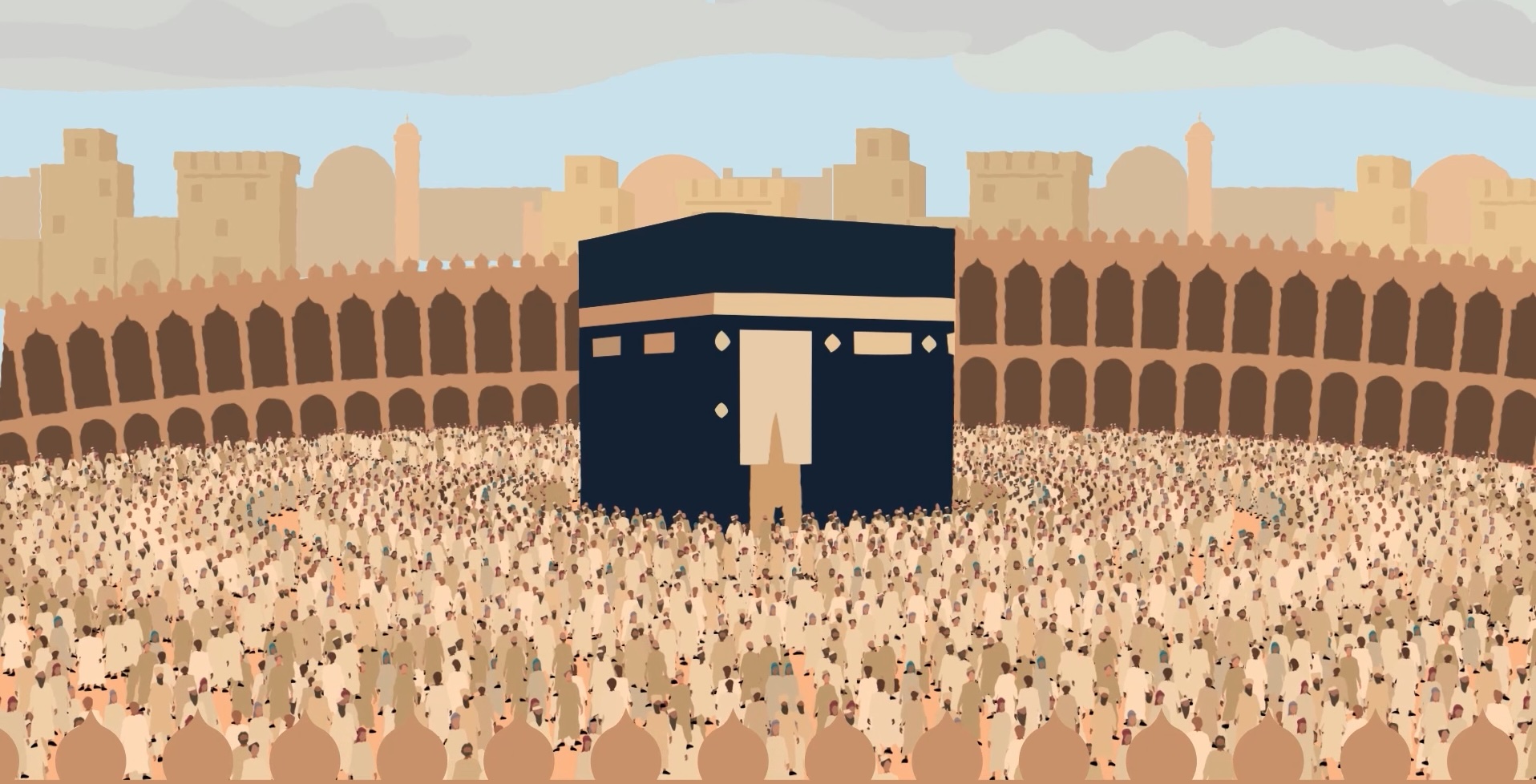
Instead of a picture this is his name in Arabic. Muslims believe that the Prophet Muhammad was chosen by God, who they call Allah, to spread the religion of Islam. No pictures of Muhammad are allowed to make it clear that Muslims only worship Allah who is unseen and not people or idols. In 570 CE, Muhammad was born in the Arabian city of Makkah. His father died before the birth and his mother died when he was only six. So Muhammad was brought up by his grandfather and then by his uncle. Muhammad started out as a shepherd, then became a businessman and eventually married his boss, a widow called Kadija. In the centre of Makkah there was a cube shaped building called the Kaaba, filled with 360 idols.
Every year during the month of Ramadan, there was a party when people made sacrifices to gods and goddesses. So Muhammad would leave town, climb a nearby mountain to a cave he'd found, and pray to Allah, the one unseen God he believed in. Muslims believe that when Muhammad was 40, the angel Jibreel appeared to him in the cave, bringing a message from Allah. These messages continued for the rest of Muhammad's life. They were memorised and written down by his friends and eventually put together to become the Muslim holy book called the Quran. Muslims were given a hard time in Makkah. Some were even tortured and killed. But the people of another city, Yathrib, invited the Muslims to join them, and it became known as Madinat ul-Nabi, the city of the prophet, but Makkah's rulers wouldn't leave them alone. And there were three big battles before a peace treaty was signed.
When the people of Makkah broke the treaty, Muhammad led a huge army against them, and the rulers of the city surrendered without a fight. Muhammad roared into Makkah and went straight to the Kaaba. He circled it seven times and smashed the idols, restoring the building as a place of worship for Allah. Today, Muslims still follow in Muhammad's footsteps and circle the Kaaba like he did. Prophet Muhammad died in Makkah in 632 CE. By then, Islam had spread throughout Arabia and soon it would reach out into the rest of the world. Muhammad was the final prophet of Islam and his job was done.